
In modern workspaces—at home or in offices—lighting is key to more than just visibility. Thoughtful office lighting boosts focus, mood, and energy while shaping the space's overall feel. In the UAE, where refined interiors support lifestyle and productivity, blending elegance with function is essential.
This guide explores how to master office lighting by balancing design and performance to foster creativity, efficiency, and well-being.

Why Office Lighting Is Critical to Productivity and Comfort
A Foundational Design Element
Lighting is more than an accessory—it is a structural design element that shapes the way a workspace feels and functions. Inadequate lighting can lead to a range of issues, from visual fatigue and disrupted circadian rhythms to lack of motivation. Conversely, strategic illumination creates clarity, balance, and a sense of mental and visual ease that supports focused, productive work.
Psychological and Physical Impacts
Scientific studies have consistently shown that well-lit work environments lead to increased alertness and reduced stress. When designed correctly, office lighting can elevate concentration levels, improve posture (by reducing screen glare), and reduce the incidence of headaches and eye strain. For professionals who spend extended hours at a desk, the quality of lighting is as important as ergonomic furniture.
Task Lighting: Precision Where It Matters Most
Focused Illumination for Specific Activities
Task lighting serves as the backbone of any productive workspace. It delivers concentrated light where it is most needed—typically for reading, writing, or working on a computer. A high-quality desk lamp is indispensable for these tasks, providing localized illumination that prevents glare and minimises shadows.
Choosing the Ideal Task Lamp
Opt for a desk lamp with the following features:
-
Adjustable arm and head: Allows precise light direction
-
Dimmable brightness: Adapts to varying tasks and times of day
-
LED technology: Offers long-term efficiency and consistent color temperature
In contemporary Gulf interiors, sleek LED task lamps in matte finishes or brushed metals seamlessly blend functionality with refined aesthetics.

Ambient Lighting: Establishing Overall Illumination
Setting the Mood and Tone of the Office
Ambient lighting is responsible for the general brightness of the office and serves as the visual canvas upon which task and accent lights are layered. It should be balanced, glare-free, and evenly distributed to create a harmonious environment.
Strategies for Effective Ambient Lighting
-
Ceiling fixtures: Flush mounts, pendants, or recessed downlights offer broad coverage.
-
Floor lamps: Positioned thoughtfully, they can supplement ambient lighting while adding decorative appeal.
-
Indirect lighting: Cove lighting or wall washers soften the glow and eliminate harsh shadows.
The ambient lighting should be bright enough for safe navigation and general work tasks, but gentle enough to promote a calm, focused atmosphere. Reflective surfaces, light-toned walls, and high-gloss finishes can enhance the effect by amplifying the diffusion of light.
Accent Lighting: Infusing Visual Interest and Design Depth
Highlighting Architectural and Decorative Features
Accent lighting introduces depth, dimension, and character into an otherwise functional space. It draws the eye to curated elements—such as artwork, decorative shelving, or textured walls—helping to define zones and enrich the room’s visual narrative.
Integrating Accent Fixtures
-
Wall sconces: Create symmetry or highlight focal walls
-
LED strip lighting: Perfect for bookshelves or under cabinetry
-
Spotlights: Focused beams that highlight artwork or design features
This layered lighting approach not only enhances the design aesthetic but also fosters a dynamic and inspiring environment, making the office feel less utilitarian and more thoughtfully curated.
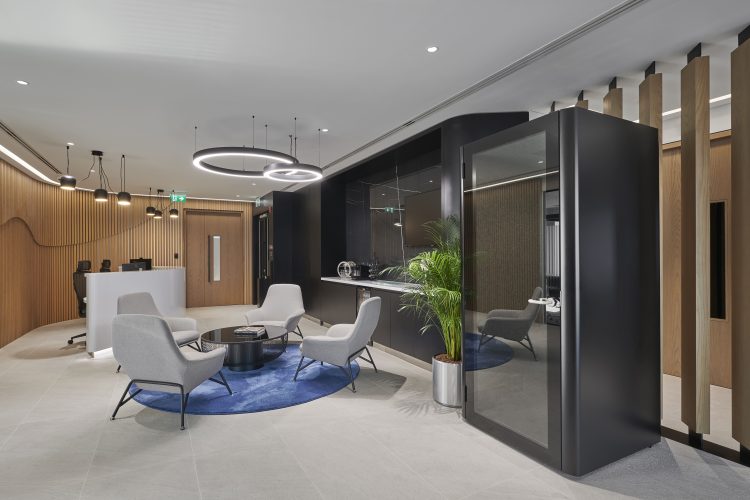
Harnessing the Power of Natural Light
Optimising Daylight Exposure
Where possible, natural light should be a central element of the office design. Exposure to daylight has profound benefits: improved mood, enhanced cognitive function, and regulation of the body’s natural rhythms. In UAE interiors, large windows, skylights, and glass partitions are often used to invite sunlight into the workspace.
Practical Considerations
-
Desk orientation: Position desks perpendicular to windows to prevent direct glare on screens
-
Window treatments: Use sheer curtains or adjustable blinds to modulate light intensity throughout the day
-
Supplementation: In low-light conditions or windowless spaces, daylight-mimicking LED bulbs can replicate the color temperature of natural light (around 5000K), maintaining alertness and visual comfort.
Selecting the Right Lighting Fixtures for a Refined Office
Cohesion with Interior Design
Fixtures should seamlessly integrate into the room’s architectural language. Whether the design style is minimalist, industrial, classic, or transitional, lighting must echo the materials, lines, and tonal palette of the space.
-
Modern offices: Opt for matte black, chrome, or white minimalist fixtures
-
Traditional spaces: Brass or gold finishes add warmth and formality
-
Eclectic environments: Statement lamps or sculptural pieces create focal points
Flexibility and Control
Adaptive lighting is a key feature of intelligent office design. Prioritise fixtures that offer:
-
Dimmability: Enables nuanced control over brightness
-
Movability: Adjustable arms or swivel heads accommodate changing needs
-
Smart controls: In advanced setups, automated systems allow users to customise settings based on time of day or activity
Energy Efficiency
In both corporate and residential settings, sustainability is a growing concern. LED bulbs are ideal for office use due to their:
-
Low energy consumption
-
Extended lifespan
-
Availability in a wide range of color temperatures
Integrating energy-efficient lighting not only reduces utility costs but aligns with broader environmental goals, especially within LEED-certified or sustainability-focused properties.
Thoughtful Fixture Placement
Proper positioning of lights ensures both comfort and visual balance:
-
Overhead lights should offer broad, uniform coverage
-
Task lights must be positioned to prevent hand shadows for writing and to avoid glare on monitors
-
Accent lights should subtly draw attention without dominating the visual field
In smaller home offices, combining compact pendant lights with desk lamps ensures efficiency without crowding the space.

Designing a Workspace That Inspires
A well-lit office is the foundation of a productive and emotionally supportive workspace. In the UAE, where attention to design detail is synonymous with quality living, office lighting should reflect not only personal style but also a commitment to wellness and efficiency.
By thoughtfully layering task, ambient, and accent lighting—and integrating natural light wherever possible—you can create a workspace that is visually balanced, energising, and conducive to sustained focus. Choosing fixtures that reflect the room’s design language while offering adjustability and energy efficiency ensures that your lighting is not only functional but artfully integrated into your environment.
Ultimately, mastering the balance between form and function in office lighting transforms a utilitarian space into one of clarity, elegance, and inspiration.